|
Themenwebsites
Medizin A - Z
im Info-Netzwerk
Medizin 2000
2.1.2026
|
|
|

- It
may be reasonable to attend for breast
cancer screening with mammography, but it may
also be reasonable not to attend because screening has both
benefits and harms
- If
2000 women are screened regularly for 10 years,
one will benefit from the screening,
as she will avoid dying from
breast cancer
- At
the same time, 10 healthy women will, as a consequence,
become cancer patients and will be treated unnecessarily.
These women will have either a part of their breast
or the whole breast removed, and they will often receive
radiotherapy and sometimes chemotherapy
- Furthermore,
about 200 healthy women will experience a false
alarm. The psychological strain until one knows
whether it was cancer, and even afterwards, can
be severe

Die
vollständige englischsprachige Kurz-Version dieser Studie
finden Sie hier
Published
27 January 2009, doi:10.1136/bmj.b86
Cite this as: BMJ 2009;338:b86
Breast
screening: the facts—or maybe not
Peter C Gøtzsche, director1,
Ole J Hartling, consultant2,
Margrethe Nielsen, PhD student1,
John Brodersen, lecturer3,
Karsten Juhl Jørgensen, researcher1
1
Nordic Cochrane Centre, Rigshospitalet, Blegdamsvej 9, DK-2100
Copenhagen, Denmark, 2 Department of Nuclear
Medicine, Vejle Sygehus, Denmark, 3 Department
of General Practice, University of Copenhagen, Denmark
Peter
Gøtzsche and colleagues argue that women are still
not given enough, nor correct, information about the
harms of screening
Three
years ago, we published a survey of the information given
to women invited for breast screening with mammography
in six countries with publicly funded screening
programmes.1
The major harm of screening, which is overdiagnosis
and subsequent overtreatment of healthy women,
was not mentioned in any of 31 invitations.1
Ten invitations argued that screening either leads
to less invasive surgery or simpler treatment,
although it actually results in 30% more surgery,
20% more mastectomies, and more use of radiotherapy2
because of overdiagnosis.3
4 Pain caused by the procedure was mentioned
in 15 invitations, although it is probably the least
serious harm, as it is transient.
Since
then, little has changed. Our 2006 article included a
box with recommended information and numbers needed
to benefit and to harm.1
Although the information leaflet used in the United
Kingdom has since been updated,5
the contents remain essentially the same. The
leaflet has the authoritative title Breast Screening:
the Facts,5
suggesting that the information can be trusted. Here,
we discuss why it is inadequate as a basis for informed
consent and introduce our leaflet, which we think
provides the information on the benefits and
harms of breast screening that women need to
make a rational decision.
The
revised leaflet emphasises the benefits of screening. The
first page leaves no doubt that screening is good
for women, with its second heading: "Why
do I need breast screening?" Furthermore, it
states, "If changes are found at an early stage, there
is a good chance of a successful recovery, "
and "Around half the cancers that are found
at screening are still small ... This means that
the whole breast does not have to be removed." It
also tells women that screening saves "an estimated
1400 lives each year in this country" and
"reduces the risk of the women who attend
dying from breast cancer."
By
contrast, little information is given about harms. It states
that "some women" find mammography uncomfortable
or painful, which becomes "many women"
in the summary. The summary also notes that
recalls for more investigations "can cause worry."
No mention is made of the major harm of screening—that
is, unnecessary treatment of harmless lesions that
would not have been identified without screening.
This harm is well known and acknowledged, even
among screening enthusiasts.3
It is in violation of guidelines and laws for
informed consent not to mention this common harm,
especially when screening is aimed at healthy
people.3
6
7 The new guidelines from the General Medical
Council state: "You must tell patients if an investigation
or treatment might result in a serious adverse outcome,
even if the likelihood is very small."6
The likelihood of being overdiagnosed after mammography
is not very small; it is ten times larger than
the likehood of avoiding death from breast cancer.1
2
Another
harm is false positive diagnoses. The leaflet notes
that about one in every 20 women screened will be
recalled for more tests, but does not explain
that this 5% rate applies to only one round
of screening. The rate of false positive diagnosis
after 10 screenings was 50% in the United States and
20% in Norway.8
9 We now know that the psychosocial strain of
a false alarm can be severe and may continue
after women are declared free from cancer.10
Many women experience anxiety, worry, despondency,
sleeping problems, and negative impact on sexuality
and behaviour, and changes in their relationships
with family, friends, and acquaintances and in
existential values.10
11 This can go on for months, and some
women will feel more vulnerable about disease and
will see a doctor more often.12
A
third harm is caused by radiotherapy of overdiagnosed women.
The leaflet states that a mammogram "involves
a tiny dose of radiation, so the risk to your
health is very small." The rate of overdiagnosis
was 30% in randomised trials of screening and 50%
in observational studies.2
13
14 We therefore believe it is misleading
to assure women that the radiation dose from the mammogram
is tiny, without telling them that the much bigger
dose used in radiotherapy is harmful when given to
healthy people. Comparison of left sided with
right sided irradiation suggests that radiotherapy
may double the mortality from heart disease and
lung cancer.15
Technological improvements may have diminished these
harms to some extent, but they are still important.
The
summary implies that screening leads to fewer mastectomies.
This is incorrect. Screening led to 20% more mastectomies
in randomised trials4
and observational studies have confirmed that
the number of mastectomies increases when screening is
introduced.2
These initial increases are not compensated for by
reduced rates among older women who are no longer screened
(unpublished national data, Danish National Board
of Health).
Carcinoma
in situ is not mentioned in the leaflet, although it
constitutes about 20% of the diagnoses made at screening
in the UK. Fewer than half of the cases progress to
invasive cancer, and 30% are treated with mastectomy.16
A patient representative has described her experience
of gaining this information as trying to "uncover
a closely guarded state secret."4
There
are no reservations in the leaflet about screening older
women, only a scare that the breast cancer risk increases
with age, although it has not been shown that
screening these women decreases their risk of
dying from breast cancer. Furthermore, the problem
with overdiagnosis becomes more pronounced, and the
likehood of gaining any benefit smaller, due to competing
risks of death.
Finally,
it has not been proved that screening saves lives.
There is an inevitable bias in assessment of cause
of death that can be particularly difficult when
women have more than one cancer.2
Trials show that breast screening does not decrease
total cancer mortality. The relative risk was 1.02
(95% confidence interval 0.95 to 1.10) in the
two most reliable trials and 0.99 in the others,
and there is no reliable evidence that screening decreases
total mortality,2
although half a million women participated in
the screening trials. This indicates that the benefit of
screening is likely to be smaller than generally
perceived.
We
have written an evidence based leaflet (see bmj.com) to
help women decide about breast screening. As
recommended,4
it describes benefits and harms in numbers that
can readily be understood and uses the same denominator
throughout: 2000 women screened every two years
for 10 years.
We
tested draft versions among general practitioners in Denmark,
Norway, and Sweden belonging to the Nordic Risk Group
Network and among lay people, which led to considerable
improvements. A physician noted that it was unbalanced
because we had listed several harms but only
one benefit. We therefore tried to list more
benefits, but realised that there is only one important
benefit, the reduction in breast cancer mortality.
It is often claimed that a normal mammography
result reassures women that they are healthy.
But most women will feel healthy before they are
invited to screening, and the invitation may also cause
insecurity as well as false security because about
half of the breast cancers that require treatment
are found between screening rounds.3
Therefore, screening creates security, insecurity,
and false reassurance.
The
box gives the summary from the leaflet. We hope it provides
sufficient information to enable women, together
with their family and general practitioner, to
decide whether to participate.4
The leaflet was distributed to general practitioners
and gynaecologists in Denmark in March 2008.
It is available in English and Danish and can
be downloaded from bmj.com, screening.dk, or cochrane.dk.
It will be translated into Icelandic, Norwegian, Swedish
and Finnish and we aim to update it when necessary.
|
Summary from evidence based leaflet
-
It may be reasonable to attend
for breast cancer screening with mammography,
but it may also be reasonable
not to attend because screening has both
benefits and harms
-
If 2000 women are screened regularly for
10 years, one will benefit from the
screening, as she will avoid dying
from breast cancer
-
At the same time, 10 healthy women
will, as a consequence, become cancer
patients and will be treated
unnecessarily. These women will have either
a part of their breast or the
whole breast removed, and they will often
receive radiotherapy and sometimes
chemotherapy
-
Furthermore, about 200 healthy
women will experience a false alarm. The
psychological strain until one
knows whether it was cancer, and even afterwards,
can be severe
|
|
Consequences
of imbalance
The
one sided propaganda about breast screening is a global
phenomenon that has resulted in misconceptions about
its effects.1
A survey of American and European women17
found that 68% believed screening reduced their
risk of contracting breast cancer, 62% that screening
at least halved mortality, and 75% that 10 years of
screening saved 10 of 1000 participants (an overestimate
of 20 times2).
Another study showed that only 8% were aware that
participation can harm healthy women18
and that 15% believed their lifetime risk of
contracting the disease was more than 50% (an
overestimate of five times).
The
UK National Screening Committee agreed in 2000 that the
purpose of information was not to recruit women but
to allow them to choose whether to participate,4
but this decision has not had any effect on the
information provided.5
New evidence that shows less benefit and substantially
more harm from screening than previously thought
has largely been ignored.1
5 We believe that if policy makers
had had the knowledge we now have when they decided
to introduce screening about 20 years ago, when nobody
had published data on overdiagnosis or on the imbalance
between numbers of prevented deaths from breast cancer
and numbers of false positive screening results
and the psychosocial consequences of the false
alarms, we probably would not have had mammography
screening.
Women
taking tests continue to experience morbidity and regret
because they found out many of the harms of screening
from experience.19
It may be too late to start asking questions on arrival
to the screening unit, as the UK leaflet suggests.5
There is also a conflict of interest when those
who provide the information are responsible for
the success of the screening programme.1
High participation rates are pivotal, and information
about harms may deter women from participation.
The
question of whether the benefits of screening outweigh the
harms is a value judgment that needs to be made by
invited women.19
To allow this to happen, the responsibility for the
screening programmes must be separated from the
responsibility for the information material,1
and information materials should be carefully tested
among general practitioners and lay people.
Cite
this as: BMJ 2009;338:b86
We thank Hazel Thornton and Michael Baum for comments
on the manuscript.
Contributors and sources: PCG wrote the first draft,
all authors commented on it and are guarantors.
We have all contributed to research on screening,
and four of us wrote an information leaflet about
mammography screening.
Funding: Production and distribution of our leaflet
in Denmark was funded by KræftFonden.
Competing interests: None declared.
Provenance and peer review: Not commissioned; externally
peer reviewed.
-
Jørgensen
KJ, Gøtzsche PC. Content of invitations to publicly
funded screening mammography. BMJ 2006;332:538-41.
[Free Full Text]
-
Gøtzsche
PC, Nielsen M. Screening for breast cancer with mammography.
Cochrane Database Syst Rev 2006;(4):CD001877.
-
Vainio
H, Bianchini F. IARC handbooks of cancer prevention.
Vol 7: breast cancer screening. Lyon: IARC Press, 2002.
-
Raffle
A, Gray M. Screening: evidence and practice. Oxford:
Oxford University Press, 2007.
-
Department
of Health, NHS Cancer Screening Programmes. Breast screening:
the facts. 2006.
www.cancerscreening.nhs.uk/breastscreen/publications/ia-02.html..
-
General
Medical Council. Consent: patients and doctors making
decisions together. London: GMC, 2008.
www.gmc-uk.org/guidance/ethical_guidance/consent_guidance/index.asp.
-
Perry
N, Broeders M, de Wolf C, Törnberg S, Holland R, von
Karsa L, eds. European guidelines for quality assurance
in breast cancer screening and diagnosis. 4th ed. Luxembourg:
Office for Official Publications of the European Communities,
2006.
-
Elmore
JG, Barton MB, Moceri VM, Polk S, Arena PJ, Fletcher
SW. Ten-year risk of false positive screening mammograms
and clinical breast examinations. N Engl J Med
1998;338:1089-96.
[Abstract/Free Full Text]
-
Hofvind
S, Thoresen S, Tretli S. The cumulative risk of a false-positive
recall in the Norwegian breast cancer screening program.
Cancer 2004;101:1501-7.
[CrossRef][ISI][Medline]
-
Brodersen
J, Thorsen H, Kreiner S. Validation of a condition-specific
measure for women having an abnormal screening mammography.
Value in Health 2007;10:294-304.
[CrossRef][ISI][Medline]
-
Brodersen
J. Measuring psychosocial consequences of false-positive
screening results - breast cancer as an example. Department
of General Practice, University of Copenhagen. 2006.
http://cms.ku.dk/sund-sites/ifsv-sites/ifsv-inst/ominstituttet/afdelinger/almen_medicin/medarbejdere/publicationdetail/?id=1109837.
-
Barton
MB, Moore S, Polk S, Shtatland E, Elmore JG, Fletcher
SW. Increased patient concern after false-positive mammograms:
clinician documentation and subsequent ambulatory visits.
J Gen Intern Med 2001;16:150-6.
[CrossRef][ISI][Medline]
-
Zahl
P-H, Strand BH, Mahlen J. Breast cancer incidence in
Norway and Sweden during introduction of nation-wide
screening: prospective cohort study. BMJ 2004;328:921-4.
[Abstract/Free Full Text]
-
Jørgensen
KJ, Gøtzsche PC. Overdiagnosis in publicly organised
mammography screening programmes: systematic review
of incidence trends. BMJ (in press).
-
Darby
S, McGale P, Taylor C, Peto R. Long-term mortality from
heart disease and lung cancer after radiotherapy for
early breast cancer: prospective cohort study of about
300 000 women in US SEER cancer registries. Lancet
Oncol 2005;6:557-65.
[CrossRef][ISI][Medline]
-
Department
of Health, NHS Cancer Screening Programmes. Screening
for breast cancer in England: past and future. 2006.
www.cancerscreening.nhs.uk/breastscreen/publications/nhsbsp61.html.
-
Domenighetti G, D’Avanzo B, Egger M, Berrino F,
Perneger T, Mosconi P, et al. Women’s perception
of the benefits of mammography screening: population-based
survey in four countries. Int J Epidemiol 2003;32:816-21.
[Abstract/Free Full Text]
-
Schwartz
LM, Woloshin S, Fowler FJ Jr, Welch HG. Enthusiasm for
cancer screening in the United States. JAMA 2004;291:71-8.
[Abstract/Free Full Text]
-
Thornton
H, Edwards A, Baum M. Women need better information
about routine mammography. BMJ 2003;327:101-3.
[Free Full Text]
(Accepted
23 October 2008)
|
|
|
Werbung im Info-Netzwerk Medizin 2000
Nachfolgend haben im Gesundheitswesen tätige Personen, Organisationen und Unternehmen die Möglichkeit,
über ihre besonderen Kompetenzgebiete, Produkte und Dienstleistungen
zu informieren , bzw. für diese zu
werben.

Anzeige
Weltweit helfen viele ehrenamtlich tätige
Idealisten mit Hilfe der
kostenlosen Smartphone-App Be My Eyes sehbehinderten,
bzw. blinden Menschen - innerhalb weniger Sekunden und in über hundert Sprachen - die Tücken des Alltags besser zu
meistern.
mehr lesen
(WIKIPEDIA in deutscher Sprache)
Anzeige
Was Sie schon immer über die
Antibabypille
wissen wollten
Das Angebot an oralen Kontrazeptiva (die "Pille") ist groß. Jede Frau hat daher die Möglichkeit, sich die zu ihrer Lebenssituation passende
Antibabypille verordnen zu lassen.
Quelle:Info-Netzwerk Medizin 2000-de, www.antibabypille.info, 2025

Nicht invasive Analysen der Ausatemluft helfen bei der Diagnostik und dem Therapie-Management
von Atemwegserkrankungen wie Asthma und COPD.
Das
Medizintechnik-Unternehmen
Specialmed hat sich auf Atemgas-Analysen spezialisiert und bietet
Therapeuten und betroffenen Patienten kleine,
leicht zu bedienende
Atemgas-Analyse-Geräte an.
Schwerpunkte der Anwendung sind der zum
Management einer Asthma- und COPD-Therapie geeignete
FeNO-Atemtest
- und
der
H2-Atemtest
der eine schnelle und unkomplizierte Diagnose einer
Laktose-Unverträglichkeit dient.
Nützlich ist auch der ToxCO-II- Atemtest,
da er die Erkennung von
leicht zu übersehenen, lebensbedrohlichen Kohlenmonoxid-Vergiftungen
ermöglicht.
Dieser Test unterstützt auch die
Rauchenentwöhnung
und senkt bei
Ex-Rauchern das ständig vorhandene Rückfall-Risiko.
Wichtige Info-Links:

Anzeige
Es gibt keine allgemein wissenschaftlich anerkannten Regeln welche Lebensmittel
in welcher Kombination, bzw. Menge gesund sind - und welche nicht.
Man kann den Eindruck gewinnen, dass jeder "Experte" eine individuell unterschiedliche Auffassung
von bestimmten Themen hat . Die wissenschaftlichen Erkenntnisse widersprechen einander und
die Ansichten variieren erheblich. Auf der Website
www.medizin-2000.de/gesunde-ernaehrung versuchen wir unsere Besucher durch unvoreingenommene Informationen in die Lage zu versetzen, sich trotz des
vorherrschenden Datenchaos ein praxistaugliches eigenes Urteil zu bilden.

Anzeige
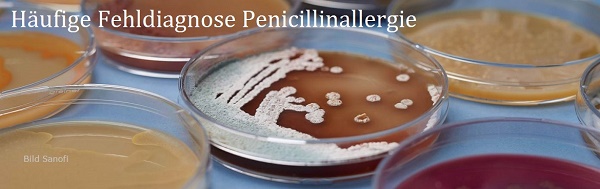
Die angeblich weite Verbreitung von
Penicillin-Allergien, behindert die medikamentöse Behandlung von bakteriell bedingten Infektionen.
Die vom Patienten erinnerte Diagnose wird
selten überprüft und ist oft (bis
zu 90%?) falsch.
Sie führt zum unnötigen Einsatz
von teuren Reserve-Antibiotika und
fördert die Entwicklung weiterer Antibiotika-Resistenzen.
Preisgünstiges Penicillin könnte
nach erfolgtem Test, ohne Nebenwirkungen befürchten zu müssen, verordnet werden. Die
häufige Fehldiagnose
"Penicillin-Allergie"
führt zum unnötigen,
kontraproduktiven Einsatz teurer Reserve-Antibiotika. Auf der Website
www.allergietherapie.de/penicillinallergie
können sich Betroffene weiter informieren.
|
|
|
|
|
|
|

 zum Seitenanfang
|
|
Hier können Kooperationspartner die Mitglieder ihrer jeweiligen
Zielgruppen über ihr Unternehmen, ihre besonderen
Kompetenzgebiete, sowie die von ihnen angebotenen Produkte und
Dienstleistungen werbend informieren.
07.12.2021
Ehrenamtlich tätige Idealisten helfen mit Hilfe der kostenlosen Smartphone-App
Be My Eyes blinden und sehbehinderten Menschen
-weltweit und innerhalb weniger Sekunden und in über
hundert Sprachen- die Tücken des Alltags besser zu
meistern.
App-Download und Anmeldung
 Atemgas-Analysen
 unterstützen Diagnostik und das Therapie-Management
wichtiger Krankheiten. Die Messdaten sind
von Ärzten und betroffenen Patienten schnell, kostengünstig
und nebenwirkungsfrei zu erheben.
Specialmed hat sich auf Atemgas-Analysen spezialisiert und bietet innovative
Atemgas-Analyse-
Geräte an. Schwerpunkte sind der
FeNO-Atemtest zur
Asthma-Diagnose und der
H2 Atemtest zur Diagnose einer
Laktose-Unverträglichkeit sowie der
CO-Atemtest zur Unterstützung der
Rauchenentwöhnung. Und
hier gehts zum
Specialmed-Shop
 Algen - Vielfalt aus dem Meer
Speisealgen sind in der asiatischen Küche weit verbreitet
und in Europa in erster Linie als Bestandteil von Sushi bekannt.
Man unterscheidet zwischen Mikro- und Makroalgen.Mikroalgen werden als
Nahrungsergänzungsmittel
angeboten - jetzt auch in Bio-Qualität. Die bekanntesten Mikroalgen sind
Spirulina,
Chlorella,
Astaxanthin und
AFA
.

 Gesunde
Kinder:
Gesunde
Kinder: Was viele
Frauen nicht wissen - ein Mangel am
Vitamin Folsäure
sollte schon vor Beginn einer
Schwangerschaft durch die Einnahme von
Folsäure-Tabletten ausgeglichen
werden.
mehr lesen
Dieses Medikament heisst Folarell und jede Frau kann es in der Apotheke ihres
Vertrauens rezeptfrei als "Pille zur Anti-Baby-Pille" zu kaufen.
Oder bequem hier in der online Apotheke
bestellen.
 Bio-Nutzhanf-Produkte:
Liebhaber unverfälschter Naturprodukte wollen
die Kräfte der Natur nutzen.
Innovative deutsche und
österreichische Unternehmen stellen
in enger Zusammenarbeit mit
engagierten Bio-Landwirten Nutzhanf-Produkte her,
die ausschließlich aus legalem,
EU-zertifiziertem, Saatgut gezogen
werden. Sie enthalten
Cannabidiol (CBD)und Cannabigerol
(CBG).
Sanorell Pharma
empfiehlt das Fachbuch:
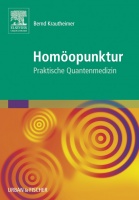 Homöopunktur
Praktische Quantenmedizin.
Dr. med. Bernd Krautheimer. Die durch die Kombination von
Homöopathie
und Akupunktur erzielten Synergieeffekte
ermöglichen ein optimales ganzheitliches Therapie-Ergebnis.
Der
Sanorell
Vital-Test
hat ergeben, dass 47% der Frauen und 45% der
Männer nicht ausreichend mit
Vitaminen
und Spurenelementen versorgt sind.
Der Sanorell-Vital-Test zeigt, ob es
sinnvoll ist, einen entdeckten
Mangel
durch passende,
in jeder Apotheke rezeptfrei zu kaufende
Nahrungsergänzungsmittel auszugleichen. Über die
Versandapotheke
Fixmedika können Sie sich die
Vital Plus-Kombination kostengünstig zusenden lassen.
Thymustherapie: Furcht vor dem Aus ist unbegründet.
Deutsche Verwaltungsgerichte
haben den Weg freigehalten, so dass die seit vielen
Jahren beliebte
Thymustherapie
auch in Zukunft auf dem Wege der Eigenherstellung der
Thymus-Peptide legal durchgeführt werden kann.
Das Unternehmen
Sanorell Pharma
verfügt
über alle behördlich vorgeschriebenen Genehmigungen und
unterstützt die an der Thymustherapie interessierten
Therapeutinnen und Therapeuten aktiv bei der Herstellung der
Thymus-Medikamente.
|
|