|
|




Themenwebsites
Medizin A - Z
im Info-Netzwerk
Medizin 2000
2.1.2026
|
Die
vollständige englischsprachige Version dieser Studie THE LANCET ONCOLOGY: Press Release
NEW SURGICAL TECHNIQUE SHOWS PROMISING RESULTS FOR PATIENTS WITH CERVICAL CANCER A new surgical technique could allow surgeons to perform a radical hysterectomy in patients with early-stage cervical cancer—with fewer complications, reduced morbidity, and a lower risk of local tumour recurrence than current surgical methods, according to an Article published Online first and in the July edition of The Lancet Oncology. The technique, called total mesometrial resection (TMMR), is a modified version of the traditional radical hysterectomy and involves more accurate, anatomically based resection of the cancer to prevent damage to the pelvic autonomic nervous system and to minimise surgical trauma. For over 100 years radical hysterectomy has been the standard surgical treatment for early-stage cervical cancer. However, the procedure has a relatively high rate of tumour recurrence and many patients experience postoperative bladder and bowel dysfunction because of damage to the autonomic nerve system. In addition, postoperative radiotherapy—given as part of standard treatment—can have considerable unpleasant side-effects. Current surgical practice is to remove the pelvic tissue adjacent to the tumour along with the cervix because of the risk of it harbouring cervical cancer. However, it has been suggested that local tumour spread may be restricted to the Müllerian compartment (fallopian tubes, uterus, and proximal, middle vagina and their embryologically defined mesotissues) for relatively long phases in its natural course, and that the removal of the complete Müllerian compartment in early-stage disease could improve local tumour control while reducing surgery-associated morbidity. To improve on traditional radical hysterectomy and to show that the early stages of tumour growth are confined to the Müllerian compartment, Michael Höckel and colleagues assessed the effectiveness of TMMR without radiotherapy, in 212 patients with early-stage cervical cancer between 1999 and 2008 at the University of Leipzig in Germany. In this study, they report the histopathological tumour stages, resection margins, local recurrence, surgical morbidity, and 5-year outcomes of these patients. Overall, findings showed recurrence-free survival of 94% and 5-year survival of 96%, with low treatment-related disease. At a median follow-up of 41 months only 10 patients had a recurrence of their cancer. In addition, although 63% (134 patients) had high-risk histopathologic factors such as positive lymph-nodes and large tumour size, the overall recurrence rate was only 5%. This is considerably better than the 28% overall recurrence rate seen in similar patients treated with the normal surgical technique of radical hysterectomy. Indeed, the 5-year survival in patients with positive lymph-nodes was 91%, compared with previous reports in similar patients of 68–78%. Importantly, 132 (63%) patients had no treatment-related complications, 75 (35%) had grade 1 complications, just 20 (9%) of patients experienced grade 2 complications, and no grade 3 or 4 complications were reported.
The authors say that: “Based on historical controls, TMMR
without adjuvant radiation has the potential to improve survival
by Professor Michael Höckel, University of Leipzig, Leipzig, Germany. michael.hoeckel(no spam)uniklinik-leipzig.de
Martine Persico
|



|
|
|||


Das Medizintechnik-Unternehmen Specialmed hat sich auf Atemgas-Analysen spezialisiert und bietet Therapeuten und betroffenen Patienten kleine, leicht zu bedienende Atemgas-Analyse-Geräte an.
Schwerpunkte der Anwendung sind der zum Management einer Asthma- und COPD-Therapie geeignete FeNO-Atemtest - und der H2-Atemtest der eine schnelle und unkomplizierte Diagnose einer Laktose-Unverträglichkeit dient.
Nützlich ist auch der ToxCO-II- Atemtest, da er die Erkennung von leicht zu übersehenen, lebensbedrohlichen Kohlenmonoxid-Vergiftungen ermöglicht.
Dieser Test unterstützt auch die Rauchenentwöhnung und senkt bei Ex-Rauchern das ständig vorhandene Rückfall-Risiko.
Atemgas Analysen
Atemgas Analyse Geräte
Nobreath für den FeNo-Atemtest
Gastrolyzer für den H2 Atemtest
Smokerlyser u.a. für die Raucherentwöhnung





|
Hier können Kooperationspartner die Mitglieder ihrer jeweiligen
Zielgruppen über ihr Unternehmen, ihre besonderen
Kompetenzgebiete, sowie die von ihnen angebotenen Produkte und
Dienstleistungen werbend informieren.
07.12.2021
 Ehrenamtlich tätige Idealisten helfen mit Hilfe der kostenlosen Smartphone-App
Be My Eyes blinden und sehbehinderten Menschen
-weltweit und innerhalb weniger Sekunden und in über
hundert Sprachen- die Tücken des Alltags besser zu
meistern.
Ehrenamtlich tätige Idealisten helfen mit Hilfe der kostenlosen Smartphone-App
Be My Eyes blinden und sehbehinderten Menschen
-weltweit und innerhalb weniger Sekunden und in über
hundert Sprachen- die Tücken des Alltags besser zu
meistern.App-Download und Anmeldung 
Atemgas-Analysen unterstützen Diagnostik und das Therapie-Management wichtiger Krankheiten. Die Messdaten sind von Ärzten und betroffenen Patienten schnell, kostengünstig und nebenwirkungsfrei zu erheben. Specialmed hat sich auf Atemgas-Analysen spezialisiert und bietet innovative Atemgas-Analyse- Geräte an. Schwerpunkte sind der FeNO-Atemtest zur Asthma-Diagnose und der H2 Atemtest zur Diagnose einer Laktose-Unverträglichkeit sowie der CO-Atemtest zur Unterstützung der Rauchenentwöhnung. Und hier gehts zum Specialmed-Shop  Algen - Vielfalt aus dem Meer
Speisealgen sind in der asiatischen Küche weit verbreitet und in Europa in erster Linie als Bestandteil von Sushi bekannt. Man unterscheidet zwischen Mikro- und Makroalgen.Mikroalgen werden als Nahrungsergänzungsmittel angeboten - jetzt auch in Bio-Qualität. Die bekanntesten Mikroalgen sind Spirulina, Chlorella, Astaxanthin und AFA . 

Gesunde Kinder: Was viele Frauen nicht wissen - ein Mangel am Vitamin Folsäure sollte schon vor Beginn einer Schwangerschaft durch die Einnahme von Folsäure-Tabletten ausgeglichen werden. mehr lesen Dieses Medikament heisst Folarell und jede Frau kann es in der Apotheke ihres Vertrauens rezeptfrei als "Pille zur Anti-Baby-Pille" zu kaufen. Oder bequem hier in der online Apotheke bestellen. 
Bio-Nutzhanf-Produkte: Liebhaber unverfälschter Naturprodukte wollen die Kräfte der Natur nutzen. Innovative deutsche und österreichische Unternehmen stellen in enger Zusammenarbeit mit engagierten Bio-Landwirten Nutzhanf-Produkte her, die ausschließlich aus legalem, EU-zertifiziertem, Saatgut gezogen werden. Sie enthalten Cannabidiol (CBD)und Cannabigerol (CBG).
Sanorell Pharma
empfiehlt das Fachbuch:
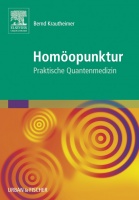 Homöopunktur Praktische Quantenmedizin. Dr. med. Bernd Krautheimer. Die durch die Kombination von Homöopathie und Akupunktur erzielten Synergieeffekte ermöglichen ein optimales ganzheitliches Therapie-Ergebnis.  Der Sanorell Vital-Test hat ergeben, dass 47% der Frauen und 45% der Männer nicht ausreichend mit Vitaminen und Spurenelementen versorgt sind. Der Sanorell-Vital-Test zeigt, ob es sinnvoll ist, einen entdeckten Mangel durch passende, in jeder Apotheke rezeptfrei zu kaufende Nahrungsergänzungsmittel auszugleichen. Über die Versandapotheke Fixmedika können Sie sich die Vital Plus-Kombination kostengünstig zusenden lassen.
Thymustherapie: Furcht vor dem Aus ist unbegründet.
Deutsche Verwaltungsgerichte haben den Weg freigehalten, so dass die seit vielen Jahren beliebte Thymustherapie auch in Zukunft auf dem Wege der Eigenherstellung der Thymus-Peptide legal durchgeführt werden kann. Das Unternehmen Sanorell Pharma verfügt über alle behördlich vorgeschriebenen Genehmigungen und unterstützt die an der Thymustherapie interessierten Therapeutinnen und Therapeuten aktiv bei der Herstellung der Thymus-Medikamente. |
|
|