|
|




Themenwebsites
Medizin A - Z
im Info-Netzwerk
Medizin 2000
2.1.2026

|
Quelle:
Studie (UK Medical Research Council)

THE LANCET: Press Release
ASPIRIN IN PRIMARY PREVENTION: REDUCES HEART ATTACKS, BUT INCREASES BLEEDS—SO NET VALUE UNCERTAIN
Use of aspirin by people with no history of relevant disease (primary prevention) reduces non-fatal heart attacks by around a fifth—but it also increases the risk of internal bleeding by around a third. Thus its long-term use in this population is of uncertain net benefit since these benefits and risks could cancel each other out. For secondary prevention (among those who already have occlusive vascular disease), aspirin’s benefits generally outweigh its small risks. The findings are discussed in an Article published in this week’s edition of The Lancet.
In this UK Medical Research Council funded study,
Professor Colin Baigent, Clinical Trial Service Unit and Epidemiological
Studies Unit (CTSU), University of Oxford, UK, and colleagues did an individual
patient meta-analysis of serious vascular events (heart attack,
stroke, or vascular death) and major bleeds in
six primary prevention trials, involving 95,000 people at
low-average risk, and 16 secondary prevention trials, involving
17,000 people at high risk.
The studies compared long-term aspirin use with control.
The researchers found that in the primary prevention
trials, aspirin reduced the already small risk
of serious vascular events (stroke, heart attack, vascular death) by 12%,
mainly due to the reduction in non-fatal heart attack mentioned above.
There was no significant difference in stroke or in vascular mortality,
but the small risk of internal bleeds increased
by around a third in those given aspirin.
In the secondary prevention studies, where people had already had
a stroke or heart attack and were at substantial risk of recurrence, aspirin
reduced the risk of serious vascular events by about a fifth, and
this benefit clearly outweighed any small extra risk of bleeding.
In both sets of trials, the proportional reductions in vascular events
were similar for men and women.
The authors conclude: “The currently available trial results…do not seem to justify general guidelines advocating the routine use of aspirin in all healthy individuals above a moderate level of risk for coronary heart disease.”
Professor Baigent adds*: “Drug safety really matters when making recommendations for tens of millions of healthy people. We don’t have good evidence that, for healthy people, the benefits of long-term aspirin exceed the risks by an appropriate margin. If effectiveness is uncertain, then cost-effectiveness calculations are irrelevant.”
In an accompanying Comment, Professor Ale Algra and Dr Jacoba P Greving, University Medical Centre Utrecht, Utrecht, Netherlands, use a cost-effectiveness model to create a table** showing which populations might or might not benefit from aspirin in primary prevention — which shows that, in most cases, it is not justified. They conclude: “Patients might not wish to be medicalised —such considerations are important in the decision to take aspirin or not. Whether statins should be preferred above aspirin is a different and difficult question that needs careful consideration too. Apart from drug treatment, one must not forget the importance of lifestyle changes, such as cessation of smoking, healthy diet, and regular exercise.”
For Professor Colin Baigent, please contact UK Medical Research Council Press Office T) press.office (at)headoffice.mrc.ac.uk
Professor Ale Algra, University Medical Centre Utrecht, Utrecht, Netherlands T) a.algra (at) umcutrecht.nl
For full Article and Comment, see: http://press.thelancet.com/aspirin.pdf
Note to editors: *Quote direct from Professor Baigent and cannot be found in text of the Article
|
|
|||


Das Medizintechnik-Unternehmen Specialmed hat sich auf Atemgas-Analysen spezialisiert und bietet Therapeuten und betroffenen Patienten kleine, leicht zu bedienende Atemgas-Analyse-Geräte an.
Schwerpunkte der Anwendung sind der zum Management einer Asthma- und COPD-Therapie geeignete FeNO-Atemtest - und der H2-Atemtest der eine schnelle und unkomplizierte Diagnose einer Laktose-Unverträglichkeit dient.
Nützlich ist auch der ToxCO-II- Atemtest, da er die Erkennung von leicht zu übersehenen, lebensbedrohlichen Kohlenmonoxid-Vergiftungen ermöglicht.
Dieser Test unterstützt auch die Rauchenentwöhnung und senkt bei Ex-Rauchern das ständig vorhandene Rückfall-Risiko.
Atemgas Analysen
Atemgas Analyse Geräte
Nobreath für den FeNo-Atemtest
Gastrolyzer für den H2 Atemtest
Smokerlyser u.a. für die Raucherentwöhnung





|
Hier können Kooperationspartner die Mitglieder ihrer jeweiligen
Zielgruppen über ihr Unternehmen, ihre besonderen
Kompetenzgebiete, sowie die von ihnen angebotenen Produkte und
Dienstleistungen werbend informieren.
07.12.2021
 Ehrenamtlich tätige Idealisten helfen mit Hilfe der kostenlosen Smartphone-App
Be My Eyes blinden und sehbehinderten Menschen
-weltweit und innerhalb weniger Sekunden und in über
hundert Sprachen- die Tücken des Alltags besser zu
meistern.
Ehrenamtlich tätige Idealisten helfen mit Hilfe der kostenlosen Smartphone-App
Be My Eyes blinden und sehbehinderten Menschen
-weltweit und innerhalb weniger Sekunden und in über
hundert Sprachen- die Tücken des Alltags besser zu
meistern.App-Download und Anmeldung 
Atemgas-Analysen unterstützen Diagnostik und das Therapie-Management wichtiger Krankheiten. Die Messdaten sind von Ärzten und betroffenen Patienten schnell, kostengünstig und nebenwirkungsfrei zu erheben. Specialmed hat sich auf Atemgas-Analysen spezialisiert und bietet innovative Atemgas-Analyse- Geräte an. Schwerpunkte sind der FeNO-Atemtest zur Asthma-Diagnose und der H2 Atemtest zur Diagnose einer Laktose-Unverträglichkeit sowie der CO-Atemtest zur Unterstützung der Rauchenentwöhnung. Und hier gehts zum Specialmed-Shop  Algen - Vielfalt aus dem Meer
Speisealgen sind in der asiatischen Küche weit verbreitet und in Europa in erster Linie als Bestandteil von Sushi bekannt. Man unterscheidet zwischen Mikro- und Makroalgen.Mikroalgen werden als Nahrungsergänzungsmittel angeboten - jetzt auch in Bio-Qualität. Die bekanntesten Mikroalgen sind Spirulina, Chlorella, Astaxanthin und AFA . 

Gesunde Kinder: Was viele Frauen nicht wissen - ein Mangel am Vitamin Folsäure sollte schon vor Beginn einer Schwangerschaft durch die Einnahme von Folsäure-Tabletten ausgeglichen werden. mehr lesen Dieses Medikament heisst Folarell und jede Frau kann es in der Apotheke ihres Vertrauens rezeptfrei als "Pille zur Anti-Baby-Pille" zu kaufen. Oder bequem hier in der online Apotheke bestellen. 
Bio-Nutzhanf-Produkte: Liebhaber unverfälschter Naturprodukte wollen die Kräfte der Natur nutzen. Innovative deutsche und österreichische Unternehmen stellen in enger Zusammenarbeit mit engagierten Bio-Landwirten Nutzhanf-Produkte her, die ausschließlich aus legalem, EU-zertifiziertem, Saatgut gezogen werden. Sie enthalten Cannabidiol (CBD)und Cannabigerol (CBG).
Sanorell Pharma
empfiehlt das Fachbuch:
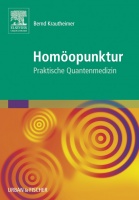 Homöopunktur Praktische Quantenmedizin. Dr. med. Bernd Krautheimer. Die durch die Kombination von Homöopathie und Akupunktur erzielten Synergieeffekte ermöglichen ein optimales ganzheitliches Therapie-Ergebnis.  Der Sanorell Vital-Test hat ergeben, dass 47% der Frauen und 45% der Männer nicht ausreichend mit Vitaminen und Spurenelementen versorgt sind. Der Sanorell-Vital-Test zeigt, ob es sinnvoll ist, einen entdeckten Mangel durch passende, in jeder Apotheke rezeptfrei zu kaufende Nahrungsergänzungsmittel auszugleichen. Über die Versandapotheke Fixmedika können Sie sich die Vital Plus-Kombination kostengünstig zusenden lassen.
Thymustherapie: Furcht vor dem Aus ist unbegründet.
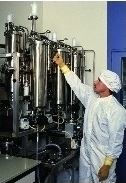
Deutsche Verwaltungsgerichte haben den Weg freigehalten, so dass die seit vielen Jahren beliebte Thymustherapie auch in Zukunft auf dem Wege der Eigenherstellung der Thymus-Peptide legal durchgeführt werden kann. Das Unternehmen Sanorell Pharma verfügt über alle behördlich vorgeschriebenen Genehmigungen und unterstützt die an der Thymustherapie interessierten Therapeutinnen und Therapeuten aktiv bei der Herstellung der Thymus-Medikamente. |
|
|
|
|
Betablocker
Therapie
|
Brustkrebs
Behandlung
| COPD
Therapie |
Deutsche
Ärzte |
Diabetes
/
Zuckerkrankheit
|
Diagnostica
aktuell |
DNA
Vaterschaftstest |
|
|
|
| Herzinsuffizienz Therapie | Herzinsuffizienz Diagnose | Herzschrittmacher | Herzkrankheiten | Heuschnupfen Therapie | Highlights Forschung | |
|
| Sport Medizin | Sublinguale spezifische Immuntherapie SLIT | Thymus Therapie | Tierhaarallergie | Tierschutz | Totalendoprothese TEP | |
|
| Zuckerkrankheit | Info-Netzwerk Medizin 2000 | Nutzungsbedingungen | Stichwortsuche Info-Netzwerk Medizin 2000 | Impressum | |
|
Werbung: Copyright © LaHave Media Services Limited
|