|
|




Themenwebsites
Medizin A - Z
im Info-Netzwerk
Medizin 2000
2.7.2026
|
Quelle: Fachblatt British Medical Journal
Published 13 August 2009, doi:10.1136/bmj.b2921 ResearchThe venous thrombotic risk of oral contraceptives, effects of oestrogen dose and progestogen type: results of the MEGA case-control studyA van Hylckama Vlieg, research fellow1, F M Helmerhorst, professor of clinical epidemiology of fertility1,2, J P Vandenbroucke, professor of clinical epidemiology1, C J M Doggen, research fellow1, F R Rosendaal, professor of clinical epidemiology, head of department1,3,4 1 Department of Clinical Epidemiology, Leiden University Medical Center, C7-P, PO Box 9600, NL-2300 RC Leiden, Netherlands, 2 Department of Gynaecology and Reproductive Medicine, Leiden University Medical Center, 3 Department of Thrombosis and Haemostasis, Leiden University Medical Center, 4 Einthoven Laboratory for Experimental Vascular Medicine, Leiden University Medical Center Correspondence to: F R Rosendaal F.R.Rosendaal@lumc.nl Objective To assess the thrombotic risk associated with oral contraceptive use with a focus on dose of oestrogen and type of progestogen of oral contraceptives available in the Netherlands. Design Population based case-control study. Setting Six participating anticoagulation clinics in the Netherlands (Amersfoort, Amsterdam, The Hague, Leiden, Rotterdam, and Utrecht). Participants Premenopausal women <50 years old who were not pregnant, not within four weeks postpartum, and not using a hormone excreting intrauterine device or depot contraceptive. Analysis included 1524 patients and 1760 controls. Main outcome measures First objectively diagnosed episodes of deep venous thrombosis of the leg or pulmonary embolism. Odds ratios calculated by cross-tabulation with a 95% confidence interval according to Woolf’s method; adjusted odds ratios estimated by unconditional logistic regression, standard errors derived from the model. Results Currently available oral contraceptives increased the risk of venous thrombosis fivefold compared with non-use (odds ratio 5.0, 95% CI 4.2 to 5.8). The risk clearly differed by type of progestogen and dose of oestrogen. The use of oral contraceptives containing levonorgestrel was associated with an almost fourfold increased risk of venous thrombosis (odds ratio 3.6, 2.9 to 4.6) relative to non-users, whereas the risk of venous thrombosis compared with non-use was increased 5.6-fold for gestodene (5.6, 3.7 to 8.4), 7.3-fold for desogestrel (7.3, 5.3 to 10.0), 6.8-fold for cyproterone acetate (6.8, 4.7 to 10.0), and 6.3-fold for drospirenone (6.3, 2.9 to 13.7). The risk of venous thrombosis was positively associated with oestrogen dose. We confirmed a high risk of venous thrombosis during the first months of oral contraceptive use irrespective of the type of oral contraceptives. Conclusions Currently available oral contraceptives still have a major impact on thrombosis occurrence and many women do not use the safest brands with regard to risk of venous thrombosis.
|


|
|
|||


Das Medizintechnik-Unternehmen Specialmed hat sich auf Atemgas-Analysen spezialisiert und bietet Therapeuten und betroffenen Patienten kleine, leicht zu bedienende Atemgas-Analyse-Geräte an.
Schwerpunkte der Anwendung sind der zum Management einer Asthma- und COPD-Therapie geeignete FeNO-Atemtest - und der H2-Atemtest der eine schnelle und unkomplizierte Diagnose einer Laktose-Unverträglichkeit dient.
Nützlich ist auch der ToxCO-II- Atemtest, da er die Erkennung von leicht zu übersehenen, lebensbedrohlichen Kohlenmonoxid-Vergiftungen ermöglicht.
Dieser Test unterstützt auch die Rauchenentwöhnung und senkt bei Ex-Rauchern das ständig vorhandene Rückfall-Risiko.
Atemgas Analysen
Atemgas Analyse Geräte
Nobreath für den FeNo-Atemtest
Gastrolyzer für den H2 Atemtest
Smokerlyser u.a. für die Raucherentwöhnung




|
Hier können Kooperationspartner die Mitglieder ihrer jeweiligen
Zielgruppen über ihr Unternehmen, ihre besonderen
Kompetenzgebiete, sowie die von ihnen angebotenen Produkte und
Dienstleistungen werbend informieren.
07.12.2021
 Ehrenamtlich tätige Idealisten helfen mit Hilfe der kostenlosen Smartphone-App
Be My Eyes blinden und sehbehinderten Menschen
-weltweit und innerhalb weniger Sekunden und in über
hundert Sprachen- die Tücken des Alltags besser zu
meistern.
Ehrenamtlich tätige Idealisten helfen mit Hilfe der kostenlosen Smartphone-App
Be My Eyes blinden und sehbehinderten Menschen
-weltweit und innerhalb weniger Sekunden und in über
hundert Sprachen- die Tücken des Alltags besser zu
meistern.App-Download und Anmeldung 
Atemgas-Analysen unterstützen Diagnostik und das Therapie-Management wichtiger Krankheiten. Die Messdaten sind von Ärzten und betroffenen Patienten schnell, kostengünstig und nebenwirkungsfrei zu erheben. Specialmed hat sich auf Atemgas-Analysen spezialisiert und bietet innovative Atemgas-Analyse- Geräte an. Schwerpunkte sind der FeNO-Atemtest zur Asthma-Diagnose und der H2 Atemtest zur Diagnose einer Laktose-Unverträglichkeit sowie der CO-Atemtest zur Unterstützung der Rauchenentwöhnung. Und hier gehts zum Specialmed-Shop  Algen - Vielfalt aus dem Meer
Speisealgen sind in der asiatischen Küche weit verbreitet und in Europa in erster Linie als Bestandteil von Sushi bekannt. Man unterscheidet zwischen Mikro- und Makroalgen.Mikroalgen werden als Nahrungsergänzungsmittel angeboten - jetzt auch in Bio-Qualität. Die bekanntesten Mikroalgen sind Spirulina, Chlorella, Astaxanthin und AFA . 

Gesunde Kinder: Was viele Frauen nicht wissen - ein Mangel am Vitamin Folsäure sollte schon vor Beginn einer Schwangerschaft durch die Einnahme von Folsäure-Tabletten ausgeglichen werden. mehr lesen Dieses Medikament heisst Folarell und jede Frau kann es in der Apotheke ihres Vertrauens rezeptfrei als "Pille zur Anti-Baby-Pille" zu kaufen. Oder bequem hier in der online Apotheke bestellen. 
Bio-Nutzhanf-Produkte: Liebhaber unverfälschter Naturprodukte wollen die Kräfte der Natur nutzen. Innovative deutsche und österreichische Unternehmen stellen in enger Zusammenarbeit mit engagierten Bio-Landwirten Nutzhanf-Produkte her, die ausschließlich aus legalem, EU-zertifiziertem, Saatgut gezogen werden. Sie enthalten Cannabidiol (CBD)und Cannabigerol (CBG).
Sanorell Pharma
empfiehlt das Fachbuch:
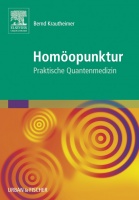 Homöopunktur Praktische Quantenmedizin. Dr. med. Bernd Krautheimer. Die durch die Kombination von Homöopathie und Akupunktur erzielten Synergieeffekte ermöglichen ein optimales ganzheitliches Therapie-Ergebnis.  Der Sanorell Vital-Test hat ergeben, dass 47% der Frauen und 45% der Männer nicht ausreichend mit Vitaminen und Spurenelementen versorgt sind. Der Sanorell-Vital-Test zeigt, ob es sinnvoll ist, einen entdeckten Mangel durch passende, in jeder Apotheke rezeptfrei zu kaufende Nahrungsergänzungsmittel auszugleichen. Über die Versandapotheke Fixmedika können Sie sich die Vital Plus-Kombination kostengünstig zusenden lassen.
Thymustherapie: Furcht vor dem Aus ist unbegründet.
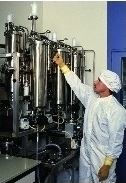
Deutsche Verwaltungsgerichte haben den Weg freigehalten, so dass die seit vielen Jahren beliebte Thymustherapie auch in Zukunft auf dem Wege der Eigenherstellung der Thymus-Peptide legal durchgeführt werden kann. Das Unternehmen Sanorell Pharma verfügt über alle behördlich vorgeschriebenen Genehmigungen und unterstützt die an der Thymustherapie interessierten Therapeutinnen und Therapeuten aktiv bei der Herstellung der Thymus-Medikamente. |
|
|