|
|
 |



Themenwebsites
Medizin A - Z
im Info-Netzwerk
Medizin 2000
2.1.2026
Werbung
|
Zervixkarzinom Früherkennung: Mit dem von der US-Arzneimittelbehörde Food and Drug Administration (FDA) zugelassenen LUMA-System kann ein Gebärmutterhalskrebs nun noch zuverlässiger als bisher möglich entdeckt werden. Ein innovatives technisches Gerät wird in Zukunft Ärzten dabei helfen, Gebärmutterhals-Krebs (Zervixkarzinom) frühzeitig zu entdecken. Das LUMA Cervical Imaging System der Firma MediSpectra kann Krebszellen auch dann entdecken, wenn sie mit den heute üblichen Diagnoseverfahren Pap-Test und Kolposkopie übersehen werden.
Die US-Arzneimittelbehörde FDA gab in einem Newsletter bekannt, daß in einer Studie bei 193 Frauen mit auffälligem Abstrich vom Muttermund (Pap Smear/Pap-Test) 50 Frühfälle von Muttermundkrebs entdeckt wurden. Von diesen 50 Fällen wurden 9 ausschließlich durch das LUMA-System entdeckt, die vorher bei der auch in Deutschland üblichen Scheidenspiegelung (Kolposkopie) übersehen worden waren. Mit Hilfe des LUMA-Systems wir der Muttermund mit Licht bestrahlt das vom Gewebe unterschiedlich reflektiert wird. Dabei ist es möglich verdächtige Stellen zu entdecken, die bei der Kolposkopie nicht auffällig waren. An diesen Stellen wird dann vom Arzt eine Gewebeprobe entnommen, die feingeweblich untersucht wird. Danach entscheiden der erfahrene Pathologe, ob es sich um Krebszellen handelt oder nicht.
Imaging System Helps Detect Cervical Pre-Cancer FRIDAY, March 17 - A new system to help doctors identify pre-cancerous cells on a woman's cervix has been approved by the U.S. Food and Drug Administration. MediSpectra's LUMA Cervical Imaging System can detect pre-cancerous cells missed by colposcopy, a diagnostic tool used on women with an abnormal Pap smear. In 50 cases of pre-cancer detected during a clinical study of 193 women, nine were caught by the LUMA system after being missed by colposcopy, the FDA said in a news release.
LUMA shines a light on the cervix and evaluates how different portions of cervical tissue respond to that light, the agency said. This and colposcopy results help doctors decide where to biopsy. "Use of the LUMA device is not a substitute for a thorough colposcopic exam," the agency stressed. If detected early, cervical cancer is "highly preventable," the FDA said. The American Cancer Society estimates that in 2006, about 9,710 cases of invasive cervical cancer will be diagnosed in the United States, and about 3,700 U.S. women will die from the disease.
More information
To learn more about cervical cancer, visit the American Cancer Society
****
American Cancer Society
Detailed Guide: Cervical Cancer What Are the Key Statistics About Cervical Cancer?
The American Cancer Society estimates that in 2006, about 9,710 cases of invasive cervical cancer will be diagnosed in the United States. Some researchers estimate that noninvasive cervical cancer (carcinoma in situ) is about 4 times more common than invasive cervical cancer.
About 3,700 women will die from cervical cancer in the United States during 2006. Cervical cancer was once one of the most common causes of cancer death for American women. Between 1955 and 1992, the number of cervical cancer deaths in the United States dropped by 74%. The main reason for this change is the increased use of the Pap test. This screening procedure can find changes in the cervix before cancer develops. It can also find early cancer in its most curable stage. The death rate from cervical cancer continues to decline by nearly 4% a year. Cervical cancer tends to occur in midlife. Half of women diagnosed with this cancer are between the ages of 35 and 55. It rarely occurs in women younger than 20. Although cervical cancer does affect young women, many older women do not realize that the risk of developing cervical cancer is still present as they age. Slightly over 20% of women with cervical cancer are diagnosed when they are over 65. It is important for older women to continue having regular Pap tests at least until age 70, and possibly longer. See the section, "Can Cervical Cancer Be Prevented?" for more specific information on current American Cancer Society screening recommendations. Cervical cancer occurs most often in Hispanic women; the rate is over twice that in non-Hispanic white women. African-American women develop this cancer about 50% more often than non-Hispanic white women.
The 5-year relative survival rate for the earliest stage of invasive cervical cancer is 92%. The overall (all stages combined) 5-year survival rate for cervical cancer is about 73%.
The 5-year survival rate refers to the percentage of patients who live at least 5 years after their cancer is diagnosed. Five-year rates are used to produce a standard way of discussing prognosis. Of course, many people live much longer than 5 years. Five-year relative survival rates exclude patients dying of other diseases. This means that anyone who died of another cause, such as heart disease, is not counted.
Keep in mind that 5-year survival rates are based on patients diagnosed and initially treated more than 5 years ago. Improvements in treatment often result in a more favorable outlook for recently diagnosed patients.
Revised: 02/09/2006
Website des Herstellers: Medispectra (http://www.medispectra.com/Default.htm)
|


Nachfolgend haben im Gesundheitswesen tätige Personen, Organisationen und Unternehmen die Möglichkeit,
über ihre besonderen Kompetenzgebiete, Produkte und Dienstleistungen
zu informieren , bzw. für diese zu
werben.

 
Anzeige
|
Das Medizintechnik-Unternehmen Specialmed hat sich auf Atemgas-Analysen spezialisiert und bietet Therapeuten und betroffenen Patienten kleine, leicht zu bedienende Atemgas-Analyse-Geräte an.
Schwerpunkte der Anwendung sind der zum Management einer Asthma- und COPD-Therapie geeignete FeNO-Atemtest - und der H2-Atemtest der eine schnelle und unkomplizierte Diagnose einer Laktose-Unverträglichkeit dient.
Nützlich ist auch der ToxCO-II- Atemtest, da er die Erkennung von leicht zu übersehenen, lebensbedrohlichen Kohlenmonoxid-Vergiftungen ermöglicht.
Dieser Test unterstützt auch die Rauchenentwöhnung und senkt bei Ex-Rauchern das ständig vorhandene Rückfall-Risiko.
Atemgas Analysen
Atemgas Analyse Geräte
Nobreath für den FeNo-Atemtest
Gastrolyzer für den H2 Atemtest
Smokerlyser u.a. für die Raucherentwöhnung




|
Hier können Kooperationspartner die Mitglieder ihrer jeweiligen
Zielgruppen über ihr Unternehmen, ihre besonderen
Kompetenzgebiete, sowie die von ihnen angebotenen Produkte und
Dienstleistungen werbend informieren.
07.12.2021
 Ehrenamtlich tätige Idealisten helfen mit Hilfe der kostenlosen Smartphone-App
Be My Eyes blinden und sehbehinderten Menschen
-weltweit und innerhalb weniger Sekunden und in über
hundert Sprachen- die Tücken des Alltags besser zu
meistern.
Ehrenamtlich tätige Idealisten helfen mit Hilfe der kostenlosen Smartphone-App
Be My Eyes blinden und sehbehinderten Menschen
-weltweit und innerhalb weniger Sekunden und in über
hundert Sprachen- die Tücken des Alltags besser zu
meistern.App-Download und Anmeldung 
Atemgas-Analysen unterstützen Diagnostik und das Therapie-Management wichtiger Krankheiten. Die Messdaten sind von Ärzten und betroffenen Patienten schnell, kostengünstig und nebenwirkungsfrei zu erheben. Specialmed hat sich auf Atemgas-Analysen spezialisiert und bietet innovative Atemgas-Analyse- Geräte an. Schwerpunkte sind der FeNO-Atemtest zur Asthma-Diagnose und der H2 Atemtest zur Diagnose einer Laktose-Unverträglichkeit sowie der CO-Atemtest zur Unterstützung der Rauchenentwöhnung. Und hier gehts zum Specialmed-Shop  Algen - Vielfalt aus dem Meer
Speisealgen sind in der asiatischen Küche weit verbreitet und in Europa in erster Linie als Bestandteil von Sushi bekannt. Man unterscheidet zwischen Mikro- und Makroalgen.Mikroalgen werden als Nahrungsergänzungsmittel angeboten - jetzt auch in Bio-Qualität. Die bekanntesten Mikroalgen sind Spirulina, Chlorella, Astaxanthin und AFA . 

Gesunde Kinder: Was viele Frauen nicht wissen - ein Mangel am Vitamin Folsäure sollte schon vor Beginn einer Schwangerschaft durch die Einnahme von Folsäure-Tabletten ausgeglichen werden. mehr lesen Dieses Medikament heisst Folarell und jede Frau kann es in der Apotheke ihres Vertrauens rezeptfrei als "Pille zur Anti-Baby-Pille" zu kaufen. Oder bequem hier in der online Apotheke bestellen. 
Bio-Nutzhanf-Produkte: Liebhaber unverfälschter Naturprodukte wollen die Kräfte der Natur nutzen. Innovative deutsche und österreichische Unternehmen stellen in enger Zusammenarbeit mit engagierten Bio-Landwirten Nutzhanf-Produkte her, die ausschließlich aus legalem, EU-zertifiziertem, Saatgut gezogen werden. Sie enthalten Cannabidiol (CBD)und Cannabigerol (CBG).
Sanorell Pharma
empfiehlt das Fachbuch:
 Homöopunktur Praktische Quantenmedizin. Dr. med. Bernd Krautheimer. Die durch die Kombination von Homöopathie und Akupunktur erzielten Synergieeffekte ermöglichen ein optimales ganzheitliches Therapie-Ergebnis.  Der Sanorell Vital-Test hat ergeben, dass 47% der Frauen und 45% der Männer nicht ausreichend mit Vitaminen und Spurenelementen versorgt sind. Der Sanorell-Vital-Test zeigt, ob es sinnvoll ist, einen entdeckten Mangel durch passende, in jeder Apotheke rezeptfrei zu kaufende Nahrungsergänzungsmittel auszugleichen. Über die Versandapotheke Fixmedika können Sie sich die Vital Plus-Kombination kostengünstig zusenden lassen.
Thymustherapie: Furcht vor dem Aus ist unbegründet.
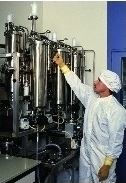
Deutsche Verwaltungsgerichte haben den Weg freigehalten, so dass die seit vielen Jahren beliebte Thymustherapie auch in Zukunft auf dem Wege der Eigenherstellung der Thymus-Peptide legal durchgeführt werden kann. Das Unternehmen Sanorell Pharma verfügt über alle behördlich vorgeschriebenen Genehmigungen und unterstützt die an der Thymustherapie interessierten Therapeutinnen und Therapeuten aktiv bei der Herstellung der Thymus-Medikamente. |
|
|
|
Werbung: Copyright © LaHave Media Services Limited |