|
|
 |



Themenwebsites
Medizin A - Z
im Info-Netzwerk
Medizin 2000
2.7.2026
|
Quelle:
Medline Abstract
Darmkrebs und Osteoporose: Calcium- und Vitamin D-Therapie enttäuschten
Zu
den Standardempfehlungen die Ärzte älteren Frauen geben gehört
der Rat nach Beginn der Wechseljahre Calcium und Vitamin D einzunehmen,
um die Wahrscheinlichkeit von Knochenbrüchen zu reduzieren. Quasi
als erwünschte Nebenwirkung wurde den Frauen in der Vergangenheit
ein Rückgang des Darmkrebs-Risikos in Aussicht gestellt.
Wurde Calcium und Vitamin D von den älteren Frauen sieben Jahre lang eingenommen, so konnte diese Therapie die Häufigkeit von bösartigen Darmtumoren nicht senken. Möglicherweise ist dafür eine weitaus längere Einnahme erforderlich.
Erratum in: N Engl J Med. 2006 Mar 9;354(10):1102. Comment in: N Engl J Med. 2006 Feb 16;354(7):750-2.
Calcium plus vitamin D supplementation and the risk of fractures.
Jackson RD, LaCroix AZ, Gass M, Wallace RB, Robbins J, Lewis CE, Bassford T, Beresford SA, Black HR, Blanchette P, Bonds DE, Brunner RL, Brzyski RG, Caan B, Cauley JA, Chlebowski RT, Cummings SR, Granek I, Hays J, Heiss G, Hendrix SL, Howard BV, Hsia J, Hubbell FA, Johnson KC, Judd H, Kotchen JM, Kuller LH, Langer RD, Lasser NL, Limacher MC, Ludlam S, Manson JE, Margolis KL, McGowan J, Ockene JK, O'Sullivan MJ, Phillips L, Prentice RL, Sarto GE, Stefanick ML, Van Horn L, Wactawski-Wende J, Whitlock E, Anderson GL, Assaf AR, Barad D; Women's Health Initiative Investigators. Division of Endocrinology, Ohio State University, 485 McCampbell, 1581 Dodd Dr., Columbus, OH 43210, USA. jackson.20@osu.edu
BACKGROUND: The efficacy of calcium with vitamin D supplementation for preventing hip and other fractures in healthy postmenopausal women remains equivocal. METHODS: We recruited 36,282 postmenopausal women, 50 to 79 years of age, who were already enrolled in a Women's Health Initiative (WHI) clinical trial. We randomly assigned participants to receive 1000 mg of elemental [corrected] calcium as calcium carbonate with 400 IU of vitamin D3 daily or placebo. Fractures were ascertained for an average follow-up period of 7.0 years. Bone density was measured at three WHI centers. RESULTS: Hip bone density was 1.06 percent higher in the calcium plus vitamin D group than in the placebo group (P<0.01). Intention-to-treat analysis indicated that participants receiving calcium plus vitamin D supplementation had a hazard ratio of 0.88 for hip fracture (95 percent confidence interval, 0.72 to 1.08), 0.90 for clinical spine fracture (0.74 to 1.10), and 0.96 for total fractures (0.91 to 1.02). The risk of renal calculi increased with calcium plus vitamin D (hazard ratio, 1.17; 95 percent confidence interval, 1.02 to 1.34). Censoring data from women when they ceased to adhere to the study medication reduced the hazard ratio for hip fracture to 0.71 (95 percent confidence interval, 0.52 to 0.97). Effects did not vary significantly according to prerandomization serum vitamin D levels. CONCLUSIONS: Among healthy postmenopausal women, calcium with vitamin D supplementation resulted in a small but significant improvement in hip bone density, did not significantly reduce hip fracture, and increased the risk of kidney stones. (ClinicalTrials.gov number, NCT00000611.).
****
1: N Engl J Med. 2006 Feb 16;354(7):684-96. Erratum in: N Engl J Med. 2006 Mar 9;354(10):1102. Comment in: N Engl J Med. 2006 Feb 16;354(7):752-4.
Calcium plus vitamin D supplementation and the risk of colorectal cancer.
Wactawski-Wende J, Kotchen JM, Anderson GL, Assaf AR, Brunner RL, O'Sullivan MJ, Margolis KL, Ockene JK, Phillips L, Pottern L, Prentice RL, Robbins J, Rohan TE, Sarto GE, Sharma S, Stefanick ML, Van Horn L, Wallace RB, Whitlock E, Bassford T, Beresford SA, Black HR, Bonds DE, Brzyski RG, Caan B, Chlebowski RT, Cochrane B, Garland C, Gass M, Hays J, Heiss G, Hendrix SL, Howard BV, Hsia J, Hubbell FA, Jackson RD, Johnson KC, Judd H, Kooperberg CL, Kuller LH, LaCroix AZ, Lane DS, Langer RD, Lasser NL, Lewis CE, Limacher MC, Manson JE; Women's Health Initiative Investigators.
Department of Social and Preventive Medicine, University at Buffalo, 270 Farber Hall, Buffalo, NY 14214, USA. jww@buffalo.edu
BACKGROUND: Higher intake of calcium and vitamin D has been associated with a reduced risk of colorectal cancer in epidemiologic studies and polyp recurrence in polyp-prevention trials. However, randomized-trial evidence that calcium with vitamin D supplementation is beneficial in the primary prevention of colorectal cancer is lacking. METHODS: We conducted a randomized, double-blind, placebo-controlled trial involving 36,282 postmenopausal women from 40 Women's Health Initiative centers: 18,176 women received 500 mg of elemental calcium as calcium carbonate with 200 IU of vitamin D3 [corrected] twice daily (1000 mg of elemental calcium and 400 IU of vitamin D3) and 18,106 received a matching placebo for an average of 7.0 years. The incidence of pathologically confirmed colorectal cancer was the designated secondary outcome. Baseline levels of serum 25-hydroxyvitamin D were assessed in a nested case-control study. RESULTS: The incidence of invasive colorectal cancer did not differ significantly between women assigned to calcium plus vitamin D supplementation and those assigned to placebo (168 and 154 cases; hazard ratio, 1.08; 95 percent confidence interval, 0.86 to 1.34; P=0.51), and the tumor characteristics were similar in the two groups. The frequency of colorectal-cancer screening and abdominal symptoms was similar in the two groups. There were no significant treatment interactions with baseline characteristics. CONCLUSIONS: Daily supplementation of calcium with vitamin D for seven years had no effect on the incidence of colorectal cancer among postmenopausal women. The long latency associated with the development of colorectal cancer, along with the seven-year duration of the trial, may have contributed to this null finding. Ongoing follow-up will assess the longer-term effect of this intervention.
(Clinical Trials.gov number, NCT00000611.) |


Nachfolgend haben im Gesundheitswesen tätige Personen, Organisationen und Unternehmen die Möglichkeit,
über ihre besonderen Kompetenzgebiete, Produkte und Dienstleistungen
zu informieren , bzw. für diese zu
werben.

 
Anzeige
|
Das Medizintechnik-Unternehmen Specialmed hat sich auf Atemgas-Analysen spezialisiert und bietet Therapeuten und betroffenen Patienten kleine, leicht zu bedienende Atemgas-Analyse-Geräte an.
Schwerpunkte der Anwendung sind der zum Management einer Asthma- und COPD-Therapie geeignete FeNO-Atemtest - und der H2-Atemtest der eine schnelle und unkomplizierte Diagnose einer Laktose-Unverträglichkeit dient.
Nützlich ist auch der ToxCO-II- Atemtest, da er die Erkennung von leicht zu übersehenen, lebensbedrohlichen Kohlenmonoxid-Vergiftungen ermöglicht.
Dieser Test unterstützt auch die Rauchenentwöhnung und senkt bei Ex-Rauchern das ständig vorhandene Rückfall-Risiko.
Atemgas Analysen
Atemgas Analyse Geräte
Nobreath für den FeNo-Atemtest
Gastrolyzer für den H2 Atemtest
Smokerlyser u.a. für die Raucherentwöhnung




|
Hier können Kooperationspartner die Mitglieder ihrer jeweiligen
Zielgruppen über ihr Unternehmen, ihre besonderen
Kompetenzgebiete, sowie die von ihnen angebotenen Produkte und
Dienstleistungen werbend informieren.
07.12.2021
 Ehrenamtlich tätige Idealisten helfen mit Hilfe der kostenlosen Smartphone-App
Be My Eyes blinden und sehbehinderten Menschen
-weltweit und innerhalb weniger Sekunden und in über
hundert Sprachen- die Tücken des Alltags besser zu
meistern.
Ehrenamtlich tätige Idealisten helfen mit Hilfe der kostenlosen Smartphone-App
Be My Eyes blinden und sehbehinderten Menschen
-weltweit und innerhalb weniger Sekunden und in über
hundert Sprachen- die Tücken des Alltags besser zu
meistern.App-Download und Anmeldung 
Atemgas-Analysen unterstützen Diagnostik und das Therapie-Management wichtiger Krankheiten. Die Messdaten sind von Ärzten und betroffenen Patienten schnell, kostengünstig und nebenwirkungsfrei zu erheben. Specialmed hat sich auf Atemgas-Analysen spezialisiert und bietet innovative Atemgas-Analyse- Geräte an. Schwerpunkte sind der FeNO-Atemtest zur Asthma-Diagnose und der H2 Atemtest zur Diagnose einer Laktose-Unverträglichkeit sowie der CO-Atemtest zur Unterstützung der Rauchenentwöhnung. Und hier gehts zum Specialmed-Shop  Algen - Vielfalt aus dem Meer
Speisealgen sind in der asiatischen Küche weit verbreitet und in Europa in erster Linie als Bestandteil von Sushi bekannt. Man unterscheidet zwischen Mikro- und Makroalgen.Mikroalgen werden als Nahrungsergänzungsmittel angeboten - jetzt auch in Bio-Qualität. Die bekanntesten Mikroalgen sind Spirulina, Chlorella, Astaxanthin und AFA . 

Gesunde Kinder: Was viele Frauen nicht wissen - ein Mangel am Vitamin Folsäure sollte schon vor Beginn einer Schwangerschaft durch die Einnahme von Folsäure-Tabletten ausgeglichen werden. mehr lesen Dieses Medikament heisst Folarell und jede Frau kann es in der Apotheke ihres Vertrauens rezeptfrei als "Pille zur Anti-Baby-Pille" zu kaufen. Oder bequem hier in der online Apotheke bestellen. 
Bio-Nutzhanf-Produkte: Liebhaber unverfälschter Naturprodukte wollen die Kräfte der Natur nutzen. Innovative deutsche und österreichische Unternehmen stellen in enger Zusammenarbeit mit engagierten Bio-Landwirten Nutzhanf-Produkte her, die ausschließlich aus legalem, EU-zertifiziertem, Saatgut gezogen werden. Sie enthalten Cannabidiol (CBD)und Cannabigerol (CBG).
Sanorell Pharma
empfiehlt das Fachbuch:
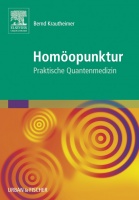 Homöopunktur Praktische Quantenmedizin. Dr. med. Bernd Krautheimer. Die durch die Kombination von Homöopathie und Akupunktur erzielten Synergieeffekte ermöglichen ein optimales ganzheitliches Therapie-Ergebnis.  Der Sanorell Vital-Test hat ergeben, dass 47% der Frauen und 45% der Männer nicht ausreichend mit Vitaminen und Spurenelementen versorgt sind. Der Sanorell-Vital-Test zeigt, ob es sinnvoll ist, einen entdeckten Mangel durch passende, in jeder Apotheke rezeptfrei zu kaufende Nahrungsergänzungsmittel auszugleichen. Über die Versandapotheke Fixmedika können Sie sich die Vital Plus-Kombination kostengünstig zusenden lassen.
Thymustherapie: Furcht vor dem Aus ist unbegründet.
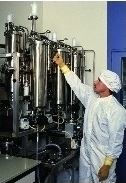
Deutsche Verwaltungsgerichte haben den Weg freigehalten, so dass die seit vielen Jahren beliebte Thymustherapie auch in Zukunft auf dem Wege der Eigenherstellung der Thymus-Peptide legal durchgeführt werden kann. Das Unternehmen Sanorell Pharma verfügt über alle behördlich vorgeschriebenen Genehmigungen und unterstützt die an der Thymustherapie interessierten Therapeutinnen und Therapeuten aktiv bei der Herstellung der Thymus-Medikamente. |
|
|
|
Werbung: Copyright © LaHave Media Services Limited |